 Noro yarn is well-known in knitting circles for its vibrant colours and earthy texture. What I didn't know was how environmentally friendly it is. Eisaku Noro, the humble man who came up with the yarn, stresses eco-friendly options in all phases of the yarn development. This is truly an organic yarn and explains why the price is higher than run-of-the-mill wool yarn. "Noro: Meet the man behind the legendary yarn" gave a fascinating behind-the-scenes look at how the yarn is developed from sheep to shelf. The book also has 40 innovative patterns for clothing, accessories and home decor. I am now quite excited to start a new project - a Kureyon blanket. Of course, the chase is on - tracking down the elusive dyelot that I MUST have.
Showing posts with label 2012 non-fiction. Show all posts
Showing posts with label 2012 non-fiction. Show all posts
Monday, March 5, 2012
Noro by Cornelia Tuttle Hamilton
Noro yarn is well-known in knitting circles for its vibrant colours and earthy texture. What I didn't know was how environmentally friendly it is. Eisaku Noro, the humble man who came up with the yarn, stresses eco-friendly options in all phases of the yarn development. This is truly an organic yarn and explains why the price is higher than run-of-the-mill wool yarn. "Noro: Meet the man behind the legendary yarn" gave a fascinating behind-the-scenes look at how the yarn is developed from sheep to shelf. The book also has 40 innovative patterns for clothing, accessories and home decor. I am now quite excited to start a new project - a Kureyon blanket. Of course, the chase is on - tracking down the elusive dyelot that I MUST have.

Monday, February 27, 2012
Folks, this ain't normal by Joel Salatin
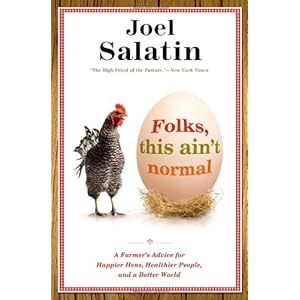
Reading Joel Salatin books is like eating popcorn - you just can't stop once you start. Fortunately he has a quite a few out there, so it's possible to keep right on turning pages.
"Folks, this ain't normal" was so down-to-earth and common sense that I had to keep giving my head a shake. This man sees right through all the nonsense floating around in the food production/food industry business. We have lost our idea of what is normal, natural and nurturing. What is needed is for a generation to take Salatin's precepts to heart and turn the tide on abnormal.
FTAN takes on just about anything having to do with daily living from child raising to gardening/farming to where we get our water. Like his previous book that I reviewed in the summer each chapter ends with take-away points. Many are easily put into practice; others are ideals that will take years for our country to embrace. But you will always find something that you can do, right now, today, that will make a difference. Each person doing their bit in their own part of the universe will get the ball rolling to restore normalcy to society in general.
Child raising is chapter one, so I'll give an example of his practical advice to return to normal in the home.
1. Grow things...anything. Indoor grow lights are still magic, and can bring sunlight indoors for remarkable discoveries.
2. Lobby for more lenient child labor opportunities so that once again teens can do historically normal work.
3. Instead of going on a cruise or Disney vacation, how about choosing a working ranch experience for the family, or an extremely rustic wilderness adventure where you make some traps and hunt for food?
4. Brainstorm entrepreneurial child-appropriate businesses - hand crafts, repair, tutoring, calligraphy, customized invitations, cleaning homes, mowing lawns, picking up rocks, hoeing weeds. The list of possibilities could fill many pages. Don't underestimate the creativity and resourcefulness of your sixteen-year-old unleashed on the community. Stay out of the way and let her run.
Thursday, January 26, 2012
The Daniel Fast by Susan Gregory
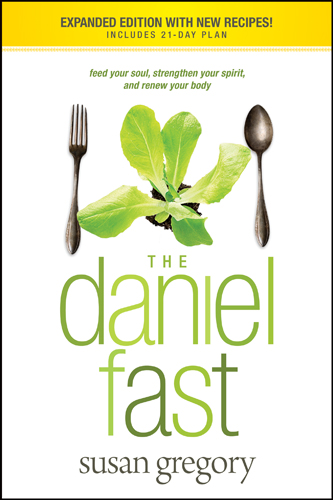 What comes to mind when you think of a fast? If you’re like me, you think of not eating for a period of time. The Daniel Fast is something different. It is eating as Daniel (of the Holy Bible fame) ate while in exile in Babylon. He was being trained to serve in the royal palace. All the young men chosen were given a daily ration of food and wine from the king’s kitchen. Daniel and his three friends felt this food would defile them (pork? Wine?). In any case, they asked for permission to eat only vegetables and water for a trial period of 10 days. At the end of the time they were evaluated and found to be healthier and better nourished than the other men who had eaten the more rich food. So the vegetable diet continued, supposedly for the duration of the three year training time. Susan Gregory contends that by following a similar eating plan and focusing on your spiritual life and prayer life during a set time, you can become closer to God.
 The book is very well laid out. The first few chapters deal with the whole idea of fasting – what it is and isn’t. She talks about why and how to fast in the Daniel manner. A whole chapter is devoted to the background of Daniel and his experience in Babylon. Chapter four focuses on the spiritual aspects of the fast. Chapter five helps you plan and prepare. The rest of the book covers the foods you can and can’t eat, recipes, a 21 day menu plan and 21 day devotional. All in all, everything you need to pull off the fast.
In case the book itself isn't enough, there is also a website with further information and support, a blog, and other resources. I ended up ordering the digital devotional/journal for a nominal price.
In order to fully give an opinion of the Daniel Fast I decided to give it a 10 day try. Here are my observations:
1. I found the devotional and journaling to be most valuable “take away” of the fast.
2. I struggled with Gregory’s assertations that this was such a healthy diet. Coming from a paleo perspective, statements saying that a vegan diet is most healthy go against what I believe.
3. Through the online experience I seemed to see a big emphasis on making good tasting food. To me, this takes away from the point of the fast, which is to be making a sacrifice. To Susan’s credit I did read something of hers that clarified that an emphasis on food was to be avoided.
4. All processed food was to be cut out. Tofu was allowed. I couldn’t see the rationale with that.
5. It was hard to maintain the vegetables only diet while continuing to feed a family. I couldn’t expect them to eat what I wanted to.
6. Almost the first day of the fast I was confronted with communion. The bread and the juice were not on the accepted list. However, I decided that God would not look unfavourably on me for taking communion and went ahead with it.
7. There seemed to be a following that was especially interested in the weight loss factor of the diet. Again, I think that this distracts from the spiritual connection you are hoping to make. (did I lose weight you ask? I refused to check 'cause this wasn't my point)
Bottom line? If you are interested in exploring the spiritual disciplines this might be a good place to start. There is lots of support and the book makes easy reading and is a great guideline to follow. No matter how long you choose to “fast” you will probably end up taking some forward steps in your spiritual life.
I was given this book to review for Tyndale House Publishers.
Tuesday, January 17, 2012
Poke the Box by Seth Godin

Catchy covers. Bite-sized paragraphs. Truth bombs. Seth Godin has a way of making you uncomfortable with the status quo. If you like this kind of uncomfortable because it pushes you to move forward, you’ll keep on reading his material. If you just find him weird, the books will hold no appeal. For myself, I can’t get enough of him. “Poke the Box” challenges us to take initiative wherever we are and start “stuff”. Do it differently; raise your hand; take a chance; what will happen if I (fill in the blank).
The book inspired me to get out of my comfort zone and do something that I was worrying about creating a stir with. So what if it fails? So what if people don’t understand? If more people took the ideas in this book seriously we’d have a rush of action. This isn’t just for big business. It can make an impact on your personal life as well. Go ahead – poke the box. You know you want to.
Subscribe to:
Posts (Atom)